Vantage Launches Token Allocation Support for Bifrost
Allocate AI provider costs by team, application, or customer using the virtual keys and request dimensions you already use in Bifrost.
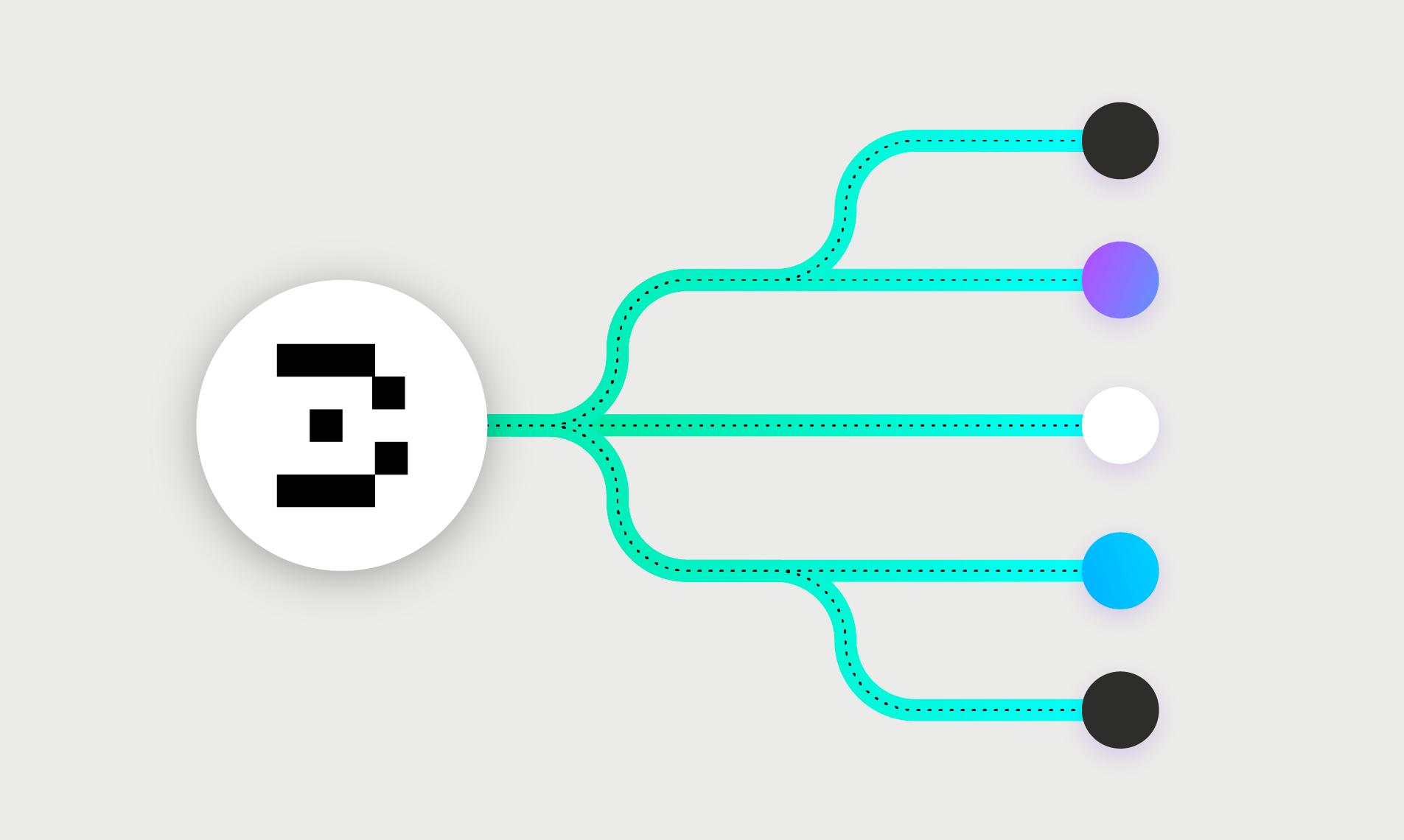

Today, Vantage is launching Token Cost Allocation support for Bifrost, a native integration that combines per-request telemetry with native provider costs to help organizations measure, allocate, and control AI spend. Customers routing AI traffic through Bifrost can allocate costs in Vantage using the virtual keys and request dimensions they already use, giving engineering and finance teams a clear view of which teams, applications, and users drive that spend.
In August, Vantage published the Token Cost Allocation Specification to establish a common framework for measuring AI spend using request-level usage and native provider cost data. Gateways like Bifrost play an increasingly important role in cost allocation, they provide the ownership context needed to connect AI provider costs to teams, applications, customers, and environments. Adding Bifrost as a Token Cost Allocation source extends this framework to another key part of customers’ AI infrastructure.
Now, with this integration, customers can allocate native AI provider costs to the teams, users, customers, applications, and workloads driving usage. Without this request-level usage, accurately splitting AI provider bills by those dimensions was not possible. For companies using Bifrost as their router, the integration supplies that usage automatically. To get started, customers enable Bifrost’s OpenTelemetry plugin and configure it to send request telemetry to Vantage’s OTLP endpoint. Vantage combines this telemetry with provider-billed costs, such as OpenAI, Anthropic, AWS Bedrock, or SpaceXAI, and allocates spend by token share across Bifrost virtual keys and request dimensions, bringing gateway-level ownership context into cost allocation. The resulting tags are available in Cost Reports, Virtual Tags, Budgets, and other cost management workflows, helping teams understand AI spend and allocate it to the applications, teams, and end-customers driving usage.
Bifrost Token Cost Allocation is available to Enterprise customers. To get started, select Bifrost under LLM Enrichment on the Integrations page, create an ingest token, and follow the in-product steps to configure the OpenTelemetry export and choose provider cost integrations. See the Bifrost enrichment documentation for detailed setup instructions.
Frequently Asked Questions
1. What is being launched today?
Vantage is launching a native Bifrost integration for Token Cost Allocation. Customers who route AI traffic through Bifrost can send OpenTelemetry request telemetry directly to Vantage. Vantage then enriches supported AI provider costs with the virtual keys and request dimensions those requests already carry, so teams can allocate spend by team, application, environment, customer, or another business dimension.
2. Who is the customer?
The integration is generally available to Vantage Enterprise customers with contracted Build Hours who route AI requests through Bifrost.
If eligible, you can add a Bifrost source under LLM Enrichment on the Integrations page and follow the setup documentation to create an ingest token, configure Bifrost’s OpenTelemetry export, choose provider cost integrations, and add any key mappings. If you are not currently eligible, you can reach out to support@vantage.sh.
3. How much does this cost?
There is no cost to add the Bifrost integration. The allocation of tags through Token Cost Allocation consumes your contracted Build Hours to enrich provider cost data with request-level tags. The amount consumed depends on both log records ingested and cost rows per month.
As a baseline, a customer with 30M cost rows per month and 5M log records per month would consume up to ~40 Build Hours per month with daily refreshes.
4. Which providers are supported?
At launch, Bifrost Token Cost Allocation supports OpenAI, Anthropic (Claude API and Claude.ai), AWS Bedrock, Google Cloud (Vertex AI Gemini and Marketplace Claude), direct Azure OpenAI, SpaceXAI, and Baseten. Azure CSP billing accounts are not supported. OpenRouter and Fireworks are not supported through Bifrost.
Customers must have an active Vantage cost integration for each provider whose costs they want to enrich. Select one cost integration per provider, except AWS: you can select every AWS cost integration that contains accounts whose Bedrock usage you want to enrich. Bifrost routing a model does not by itself make allocation work; Vantage must have matching provider cost data and compatible telemetry for that provider and model.
5. How do I set up the Bifrost integration?
Connect the supported AI providers whose costs you want to allocate. On the Vantage Integrations page, select Bifrost under LLM Enrichment, then select Connect Source. On the Manage tab, create an ingest token and copy it for future reference; it is shown only once. Supply the token through your platform’s secret management.
Configure Bifrost’s OpenTelemetry export to Vantage using the endpoint and ingest token provided during setup, with content and raw payload logging disabled. Restart or redeploy Bifrost to apply the configuration.
Then, select the provider cost integrations to enrich, one per provider except AWS, where you can select every relevant AWS cost integration. Add key mappings for OpenAI and Anthropic (Claude API), and declare the AWS account on each Bifrost deployment that routes Bedrock. Follow the Bifrost enrichment documentation for exact configuration, version requirements, and provider-specific requirements.
Applications should attach ownership dimensions in Bifrost, for example, by using virtual keys per team or application and adding x-bf-dim-* request headers for customer or environment. Vantage cannot infer ownership from token counts alone.
6. What role do I need in Vantage to set up the integration?
A user must have the Organization Owner or Integration Owner role in Vantage to create and configure the Bifrost integration. Other users can view the resulting allocated costs according to their existing workspace and Cost Report permissions.
7. What do I need to configure on the Bifrost side?
You need a supported version of Bifrost with the OpenTelemetry plugin enabled, outbound HTTPS access to Vantage, and an ingest token from the Bifrost source in Vantage. The person performing the setup must have access to the Bifrost deployment environment to configure the export, securely supply the ingest token, and restart or redeploy the gateway.
The telemetry must include provider, model, and token usage for cost matching. Include virtual keys or request dimensions for the ownership attribution you want. Configure the export so prompts, completions, raw payloads, and sensitive headers are not sent. See the Bifrost enrichment documentation for supported versions and exact configuration requirements.
8. Do I need to map Bifrost provider keys to my provider API keys?
It is recommended for exact attribution on OpenAI and Anthropic (Claude API) bills, but it is not required. Bifrost assigns its own ID to each provider key it holds, which is different from the key ID on the provider bill. After you select those cost integrations, use Step 4: Configure Key Mappings on the feed’s Manage tab to map each Bifrost provider key to the corresponding OpenAI or Anthropic API key. Vantage then tags that Bifrost key’s usage only on that API key’s cost rows.
Unmapped usage is matched by day, model, and token type within the cost integration you selected. Azure OpenAI and Google Cloud Vertex AI bills do not break down by API key, so their usage is always matched that way. AWS Bedrock is matched by the AWS account you declare, not by a key mapping.
A key mapping is not a virtual key. Virtual keys are what your applications send to Bifrost for ownership attribution, and they appear as vntg:ai:virtual_key. Key mappings associate the provider key Bifrost used with the key on the bill.
Mapping changes apply to the current month’s usage starting with the provider’s next bill import. Earlier months change only when they are re-imported, and then use the latest mappings.
9. How does Token Cost Allocation work after setup?
Bifrost sends OpenTelemetry request telemetry to Vantage for each model request that includes usage. Vantage reads the provider, model, token usage, virtual key, and selected request dimensions from that telemetry, then matches the usage to eligible cost rows from the corresponding native provider integration. Where available, key mappings, user email, or a declared AWS account provide exact attribution; other usage is matched by day, model, and token type.
Vantage allocates each matching provider cost row according to the token share associated with each tag combination.
Provider-billed cost remains the source of truth. Token Cost Allocation reattributes existing costs; it does not create, remove, or reprice them. For more detail, see the LLM Enrichment documentation.
10. Is Bifrost the source of cost data?
No. Bifrost is the source of usage telemetry and allocation metadata. Costs and provider-reported usage come from the corresponding native provider integration in Vantage and remain the financial source of truth. The integration uses Bifrost to explain and allocate provider-billed costs rather than replacing those costs with a gateway estimate.
11. Will allocation change my provider cost totals?
No. Vantage divides matching provider cost rows according to the token share associated with each Bifrost tag combination. Allocated portions and unallocated remainders sum to the original provider cost imported into Vantage. Cost rows with no matching usage remain unsplit.
12. What happens if Bifrost telemetry and the provider bill disagree?
Provider cost and usage data remain the source of truth.
When usage is matched to a specific provider key or user, if Bifrost reports fewer tokens than the provider, Vantage allocates costs covered by the telemetry and creates a leftover cost row for the uncovered portion. The leftover row retains the model tag but does not receive Bifrost allocation tags. This can happen when some requests do not pass through Bifrost or telemetry is interrupted.
When usage cannot be matched to specific bill rows by a key mapping or user, Vantage matches it by day, model, and token type within the cost integration you selected. A key mapping tells Vantage which OpenAI or Anthropic (Claude API) bill rows a Bifrost provider key should be applied to, so tags are not spread across other keys’ usage for the same day, model, and token type. To keep tags on the rows that actually went through Bifrost, add those mappings where they apply, and route all of a key’s traffic through Bifrost or use a separate key for traffic outside it.
If Bifrost reports more tokens than the provider, Vantage allocates the entire provider cost proportionally across the Bifrost telemetry. There is no leftover unallocated cost.
In both cases, the resulting rows always sum to the original provider cost.
13. Which dimensions can be used for allocation?
Vantage allocates costs using attribution in Bifrost’s OpenTelemetry export, then makes the corresponding tags available in Cost Reports, Virtual Tags, Budgets, and Cost Alerts. Coverage matters: requests without a customer attribute cannot be split by customer.
- Virtual keys: Apps call Bifrost with a virtual key (for example
x-bf-vk: sk-bf-support-prod) instead of the raw provider key. Vantage tags allocated costs with the virtual key name asvntg:ai:virtual_key, enabling clearer attribution of ownership. - Optional request metadata: For dimensions not included on the virtual key (application, environment, purpose), attach
x-bf-dim-*request headers. These are forwarded to OpenTelemetry and become tags named after the dimension, in lowercase. For example,x-bf-dim-environment: productionbecomesenvironment=production.
14. Does this require changes to how my applications call models?
Only if you are not already sending useful ownership metadata through Bifrost. Applications can keep calling models through Bifrost as they do today. The work on the Vantage side is connecting the OpenTelemetry export. If metadata is missing today, add it in Bifrost with virtual keys or x-bf-dim-* request headers so allocation dimensions exist on the request telemetry.
15. Do I still need Custom LLM Enrichment if I use Bifrost?
No, not for traffic you send through the native Bifrost OpenTelemetry path. Custom LLM Enrichment remains the right path for additional sources that emit the Token Cost Allocation Specification.
Avoid sending the same requests through more than one enrichment source. Duplicate usage does not change cost totals, but it can reduce the share allocated under each source’s tags.
16. Does Vantage collect prompts and completions?
No. Token Cost Allocation is metadata-only. Vantage uses the provider, model, token counts, and allocation tags derived from Bifrost request telemetry. Set disable_content_logging to true on the Bifrost OpenTelemetry profile and keep raw provider payload export disabled. Prompts and completions are not used for allocation, stored as enrichment artifacts, or used to train models.
17. How fresh are allocated costs?
Allocation runs as part of each provider’s existing cost ingestion, so it follows that provider’s refresh cadence. Recent days are reprocessed on a rolling three-day window so late-arriving telemetry is picked up automatically. Changes to key mappings can also reprocess usage already collected for the current billing month.
18. Can I backfill historical Bifrost telemetry?
No. The Bifrost integration begins collecting telemetry after the OpenTelemetry export is configured and pointed at Vantage. It cannot backfill request telemetry from before the integration was connected.
Historical provider costs remain available in Vantage, but costs from before Bifrost telemetry collection began cannot be retroactively allocated using this integration.
You can update allocation for telemetry Vantage has already collected. Changes to key mappings apply to the current month at the next provider bill import. Earlier months change only when re-imported, and use the latest mappings. If you are moving from Custom LLM Enrichment, pause that source before enabling Bifrost if you need to preserve prior allocation history cleanly.
If Bifrost is unable to deliver telemetry to Vantage, the data is lost. To know if this is happening, configure alerting on occurrences of Bifrost’s failed to emit trace log message.
19. What happens when I pause Token Cost Allocation?
Pausing Enrichment under Uses on the feed’s Manage tab stops allocation of new cost data and does not cancel your model-provider services. Existing allocated history is preserved, and you can resume Enrichment from the same page. Pausing Enrichment in Vantage does not by itself stop Bifrost from exporting telemetry—also disable or repoint the OpenTelemetry plugin if you want exports to stop, and revoke the ingest token if you no longer need it.
Sign up for a free trial.
Get started with tracking your cloud costs.