Vantage Launches Native Business Metrics Imports for GCP BigQuery and ClickHouse
Query operational metrics in GCP BigQuery or ClickHouse Cloud and import the results as Business Metrics for unit cost reporting and Virtual Tag allocation.


Today, Vantage is launching native Business Metrics imports for GCP BigQuery and ClickHouse Cloud. Customers who keep operational metrics in either system can bring those measures into Vantage for unit-metric reporting and business metric-based allocation in Virtual Tags.
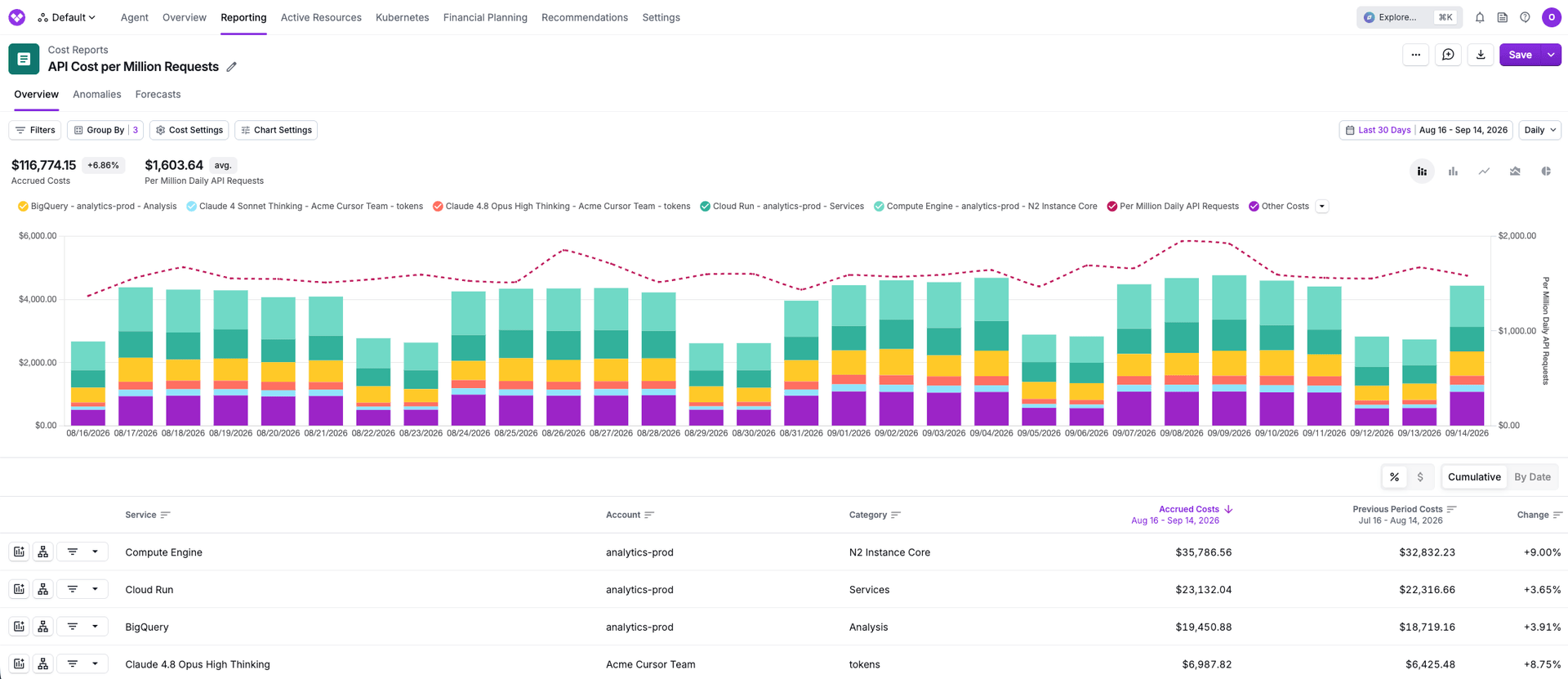
Vantage already supports native ingestion from Amazon CloudWatch, Datadog, Snowflake, and Metronome, along with CSV and API uploads when a native source isn’t available. For enterprises that store critical business metrics such as subscribers, billable events, or AI invocations in BigQuery or ClickHouse, importing these metrics into Vantage required building a custom pipeline against the /business_metrics API, or manually exporting and importing a CSV. These processes quickly fall behind, require ongoing effort, and make it harder to keep unit-metric reporting and business metric-based allocation calculations aligned with how the business is actually running.
Now, customers can connect BigQuery or ClickHouse as a Business Metrics source, and import results with SQL. When creating a business metric, customers can now choose Import via GCP BigQuery or Import via ClickHouse, and provide either a SQL query (GCP) or the endpoint ID of a saved query (ClickHouse). After validating that the data meets the Business Metrics schema, Vantage pulls available historical data from the query, up to 100 columns to support reporting on multiple dimensions simultaneously, and will refresh the data on a daily basis. Once imported, customers can use imported data for Business Metric calculations—such as Unit Cost (e.g. cost per subscriber), Usage Unit Costs (e.g. tokens per Jira ticket), or Gross Margin calculation—or for business metric–based allocation in Virtual Tags.
The GCP BigQuery and ClickHouse Business Metric imports are available to all customers with the respective Cost Integrations. To get started, navigate to Financial Planning, Business Metrics, create a Business Metric, select Imported Metrics, and choose Import via GCP BigQuery or Import via ClickHouse. See the Business Metrics documentation for additional details.
Frequently Asked Questions
1. What is being launched today?
Vantage is launching native GCP BigQuery and ClickHouse Cloud integrations for Business Metrics. Customers can now pull metrics from either system into Vantage on an ongoing basis and use them for Business Metric calculations on Cost Reports, or to allocate shared costs with Virtual Tags.
2. Who is this for?
Finance managers who want to see how AI and cloud spend tracks against business drivers—like seats, revenue, or usage—and engineering managers who want to drive infrastructure efficiency against the same measures that already track that business activity in BigQuery or ClickHouse—and want to see that activity alongside cloud spend—without exporting CSVs.
You’ll need a connected GCP billing integration for BigQuery, or a connected ClickHouse Cloud integration for ClickHouse.
3. How much does this cost?
There is no additional Vantage cost for using either of these sources for Business Metric imports. However, if connecting GCP or ClickHouse Cloud cost integrations for the first time, those costs will count toward your Vantage plan’s quota. Queries also run in your own BigQuery project or ClickHouse Cloud service, so any compute those queries use stays on your cloud bill. See the Pricing page.
4. What can I use an imported metric for?
Attach it to a Cost Report for Business Metric calculations—Unit Cost, Usage Unit Cost, Gross Margin, or Raw Value. If the metric includes labels, you can also use it for business metric–based allocation in Virtual Tags to split shared costs across teams, products, or other dimensions.
5. Do I need an existing GCP or ClickHouse cost integration?
Yes. Both BigQuery and ClickHouse imports reuse your respective connected cost integration as part of the setup.
6. How often does the data refresh?
Vantage refreshes the import daily. On first setup, it also imports available historical data based on the date bounds in your query.
7. Can I preview my query results before saving?
No. After you import, review results on the Imported Metrics tab.
8. What happens if I disconnect the integration?
Future imports stop for metrics that used that connection. You can reconnect or point the Business Metric at a different connection or query to start importing again.
9. Can I use this for forecasted metrics?
Yes, ClickHouse and BigQuery are supported as sources for forecasted metrics.
10. How do I set up a BigQuery import?
When setting up a Business Metric, choose Import via GCP BigQuery, pick your connected GCP billing integration, set the BigQuery job project, paste your SQL, and click Import Data.
Example:
See the documentation for step-by-step instructions.
11. What does my BigQuery query need to return?
All business metric imports require a date column and a value column.
Any additional columns passed in through the query will be utilized as a label, such as team, product, or application columns.
12. What GCP permissions does Vantage require?
Vantage reuses the service account from your GCP billing connection. It needs permission to run jobs in the job project and read the datasets your query uses. Vantage does not write to your BigQuery data.
13. How do I set up a ClickHouse import?
The Vantage Business Metrics integration runs against the ClickHouse Query API endpoint. To utilize a query, you must save your query in ClickHouse Cloud, create a query API endpoint from it, and share that endpoint with the API key used for your Vantage connection. Copy the endpoint ID (the UUID in the endpoint URL). In Vantage, create a Business Metric and open Imported Metrics, choose Import via ClickHouse, select the connection, paste the endpoint ID, and click Import Data.
Example of the saved query in ClickHouse:
From there create and save the query API endpoint, copy the query endpoint ID, such as 7c6a3a87-12fd-41f5-afdf-caa4697a2886 , and import into Vantage.
See the documentation for step-by-step instructions.
14. What does my ClickHouse query need to return?
All business metric imports require a date column and a value column. Any other columns become labels. The query must also declare start_date and end_date parameters and filter on them so Vantage can import one month at a time.
15. What ClickHouse permissions does Vantage require?
To start you need a connected ClickHouse Cloud cost integration. The API key used in Vantage should keep the Billing and Service reader roles used for cost import, and also include permission to run query API endpoints—Member at the organization level, with Query Endpoints access.
Then, in ClickHouse Cloud, create a query API endpoint from your saved SQL, share it with that same API key, and assign a read-only database role on the endpoint. Vantage only reads query results—it does not write to your ClickHouse data.
16. Are there any limits on queries I can utilize from ClickHouse?
ClickHouse imports are capped at 100,000 rows per month and 25 seconds of query duration.
17. What happens if the import fails?
Vantage will show an error on the Business Metric’s Imported Metrics tab. Common causes are missing permissions, a query that doesn’t return date and value, or—for ClickHouse—an endpoint that isn’t shared with the right API key.
Sign up for a free trial.
Get started with tracking your cloud costs.